Pulsar instruments
Designed and manufactured by Pulsar Measurement
- Sensors, transmitters, and controllers
- Specifications, approvals, and certificates
- Firmware, manuals, and product warranty
Pulsar Measurement
Clamp-on and open channel flow meters, level sensors, and controllers for water, wastewater, and industrial plants, connected to your PLC and SCADA by the WSI team.
About the manufacturer
Pulsar Measurement designs and manufactures flow and level measurement instruments. The company started in 1986 as Greyline Instruments, and in 2020 Greyline Instruments and Pulsar Process Measurement were combined under the name Pulsar Measurement. It is part of the TASI Measurement group, with teams and facilities in the UK, the USA, Canada, and Malaysia.
The range covers clamp-on ultrasonic flow meters for full pipes, open channel flow meters for flumes, weirs, and channels, ultrasonic and radar level sensors, pump controllers, and sludge blanket measurement. Most controllers provide 4-20 mA and relay outputs, with Modbus, Profibus, or HART options depending on the model, so readings can be passed to a PLC, RTU, or SCADA.
Learn about Pulsar Measurement on the official website (opens in a new tab)
Designed and manufactured by Pulsar Measurement
Selection, integration, and support
Measurement technologies
The main technologies in the Pulsar Measurement range and where each one fits.
Measures flow in full pipes from outside the pipe, for liquids that carry solids or bubbles such as wastewater, sludge, and slurry.
Measures flow in full pipes of relatively clean liquid from outside the pipe, without cutting the pipe or stopping the process.
Calculates open channel flow from a non-contacting level measurement at a flume or weir, using the matching flow equation.
Combines level and velocity to calculate flow in channels and pipes without a flume or weir. Non-contacting and submersible options are available.
Non-contacting level measurement for tanks, wet wells, reservoirs, and channels.
Radar level sensors such as REFLECT, used by WSI for water level in irrigation channels, rivers, and tanks.
Controllers that run pumps in a wet well or pump station based on level, with alarm and control relays.
Measures the sludge blanket level in clarifiers and settling tanks to support desludging.
Model selection depends on the liquid, the pipe or channel geometry, the required accuracy, and site conditions. Specifications and approvals always follow the latest Pulsar Measurement datasheet for each model.
Products
Pulsar models in the WSI product range, including the REFLECT radar sensor that WSI uses widely in irrigation. Other models can be proposed to suit the application.
2-wire radar level sensor
Non-contacting radar level sensor for water and wastewater, rivers, and channels. WSI uses REFLECT widely to monitor water level in irrigation networks.
Clamp-on flow meter for full pipes
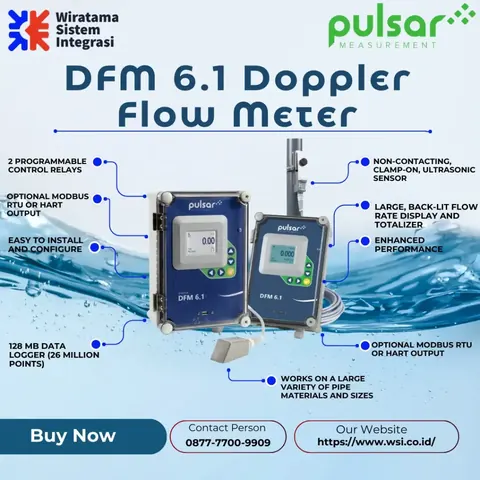
For liquids with suspended solids or bubbles. The sensor is clamped to the outside of the pipe, so there is no obstruction to flow and no pressure drop.
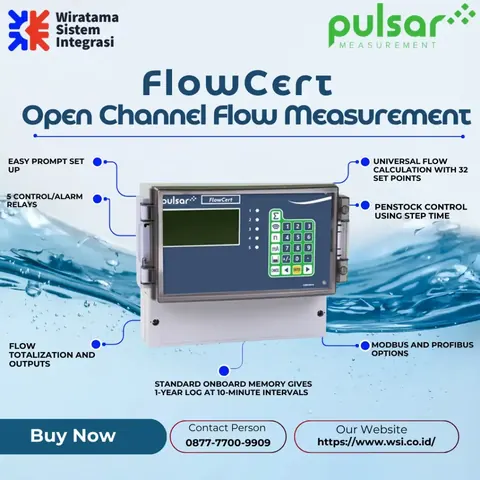
Open channel flow monitor
Open channel flow measurement with data logging and control functions, with pre-programmed flumes and weirs for quick setup.
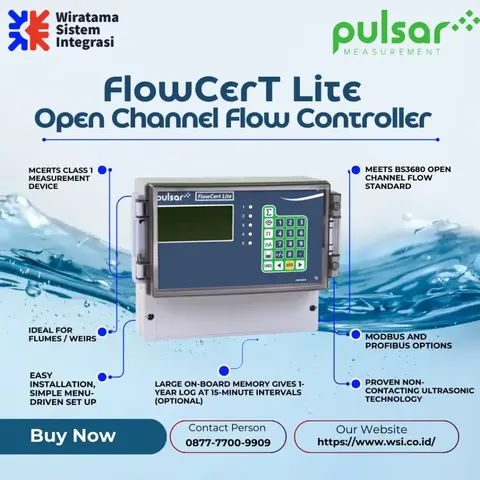
Open channel flow controller
A FlowCERT controller with a dB3 ultrasonic transducer and a PT100 temperature sensor, for flow measurement at flumes and weirs.
Summary from the Pulsar Measurement product pages. Full specifications are in the datasheet of each model.
Applications
Typical examples. The scope of each project is set during survey and design.
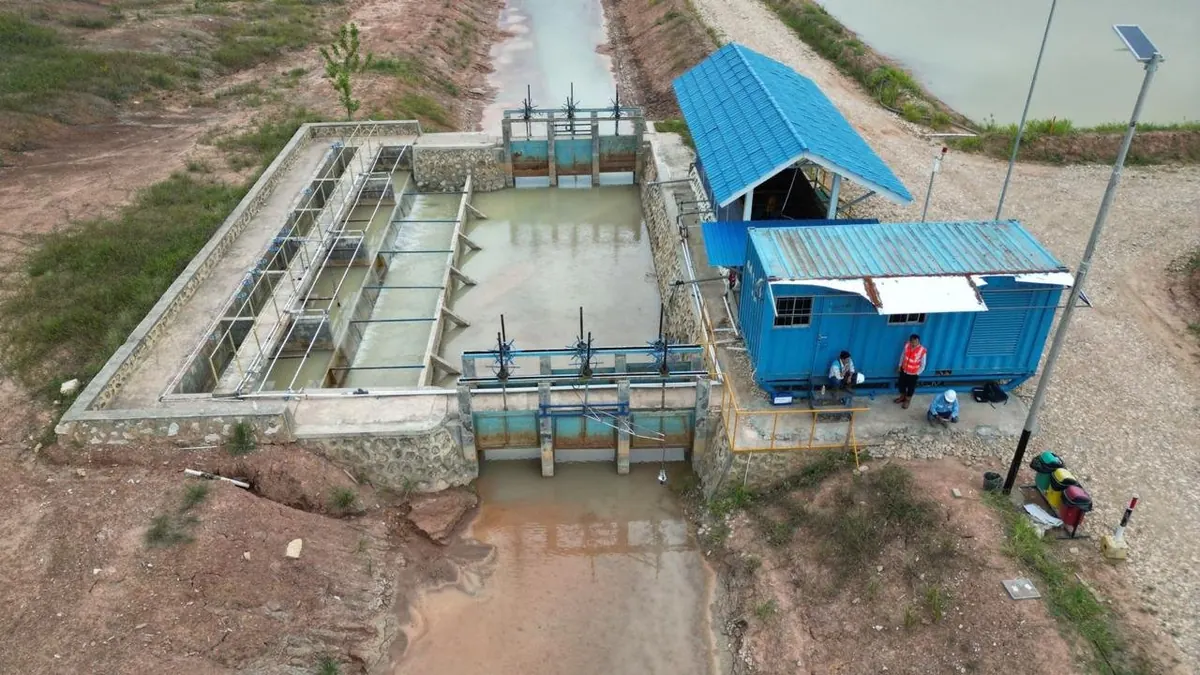
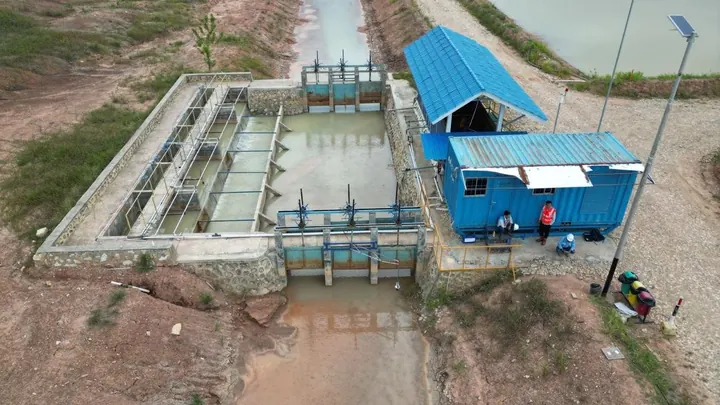
Water level at weirs, intakes, and channels, and flow at gates or measuring structures, sent to the irrigation SCADA.
Raw water flow at the intake, flow between process stages, and reservoir level.
Inlet and outlet flow at flumes or weirs, effluent discharge monitoring, and sludge blanket level.
Wet well and reservoir level, pump control, process water, and liquids with solids such as slurry.
System architecture
The instrument measures and calculates flow or level. Its outputs go to a PLC, RTU, or data logger, then to SCADA for monitoring and history.
Ultrasonic, radar, or velocity sensors on the pipe, channel, or tank
Flow and level calculation, totaliser, local display, and logging
Receives 4-20 mA, relays, Modbus, Profibus, or HART
Process screens, trends, alarms, and reports, for example TOPKAPI
The output type, cable distance, and communication protocol are agreed during design so they match the PLC, RTU, or SCADA already on site.
WSI support
The WSI team supports Pulsar instrument projects at every stage.
Check the liquid, the pipe or channel dimensions, any existing flume or weir, and the readings operators need.
Choose the measurement technology, model, sensor, and output that fit the site.
Mount the sensor, run cables, set up the controller, and connect it to the PLC, RTU, or SCADA.
Check readings in the field, train operators, and provide technical support after handover.
FAQ
Doppler works for liquids that contain solids or bubbles, such as wastewater and sludge. Transit time suits relatively clean liquids. Pipe material, diameter, and the available straight run also affect the choice, so WSI checks the site first.
No. With a flume or weir, flow is calculated from level. Without one, an area-velocity system measures level and velocity together, for example FlowCERT with a MicroFlow sensor.
Yes. Most Pulsar controllers provide 4-20 mA and relay outputs, and several models offer Modbus, Profibus, or HART. The output is chosen to match the PLC, RTU, or SCADA on site.
MCERTS is the monitoring certification scheme of the Environment Agency in England. FlowCERT Lite holds MCERTS Class 1 certification for open channel flow, and FlowCERT reaches Class 1 when combined with the DUET system. Requirements in Indonesia still follow local regulations.
Contact us on WhatsApp or through the Get a Quote page. Share the type of liquid, the pipe or channel dimensions, and photos of the measurement point so the first discussion is focused.
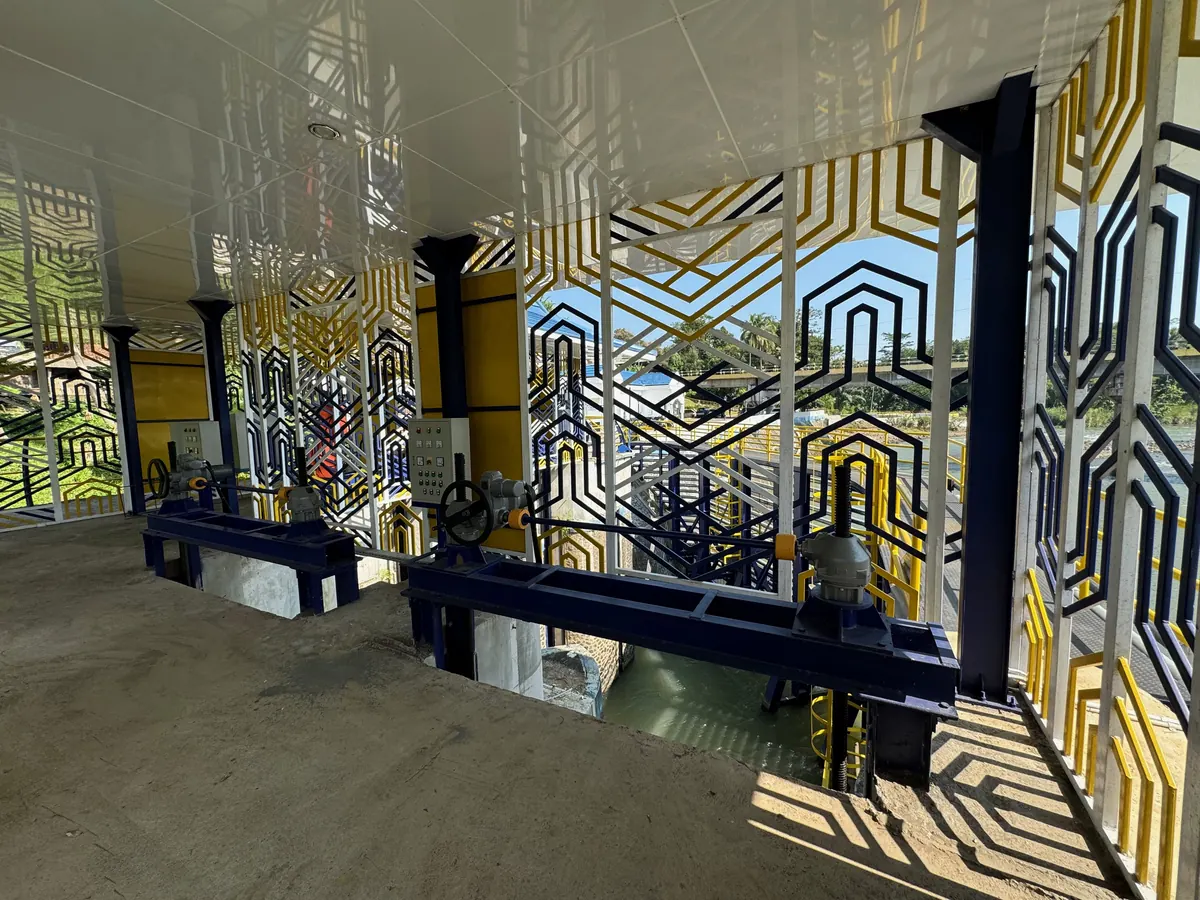
Tell the WSI team about the measurement point, the liquid, and how the data will be used.