Water Treatment Plants (WTP) and Wastewater Treatment Plants (WWTP) in Indonesia are facing significant challenges, from the rising demand for clean water to the strict management of wastewater and the need for operational efficiency.
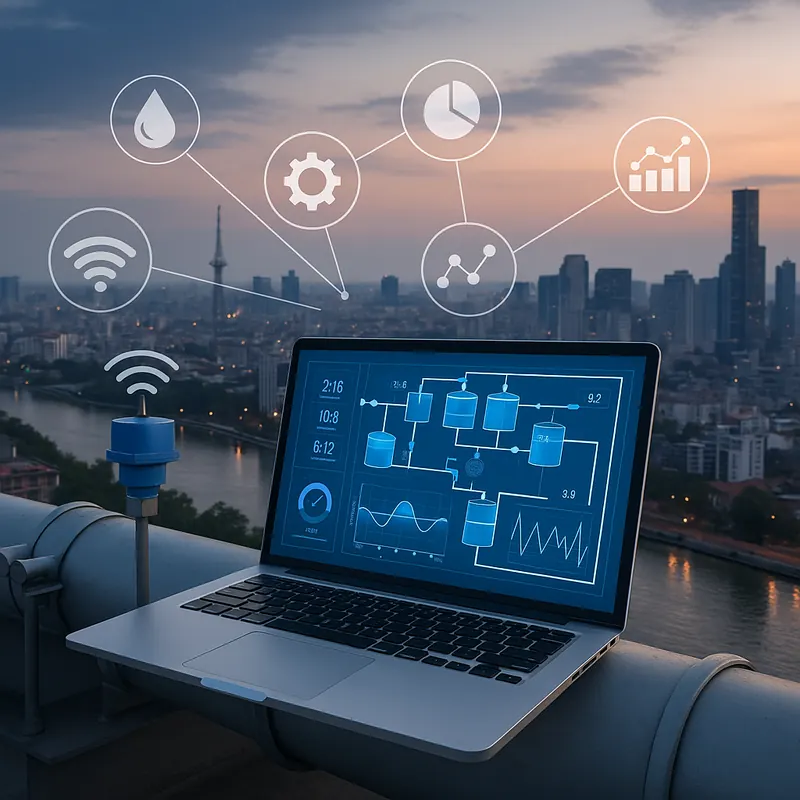
To address these challenges, automation and digital monitoring systems play a crucial role in improving service quality while minimizing operational costs.
Key Challenges in WTP & WWTP
- Fluctuating Raw Water Quality: Variations in flow and pollutant levels require continuous monitoring.
- High Energy Consumption: Pumps, blowers, and mechanical equipment consume excessive energy if not controlled properly.
- Manual Monitoring: Parameters such as pH, turbidity, DO, and flow are often checked manually, leading to delays in corrective actions.
- Regulatory Compliance: Both PDAMs and industries must comply with government standards for water and wastewater quality.
Digital Solutions for WTP & WWTP
1. Real-Time Sensors
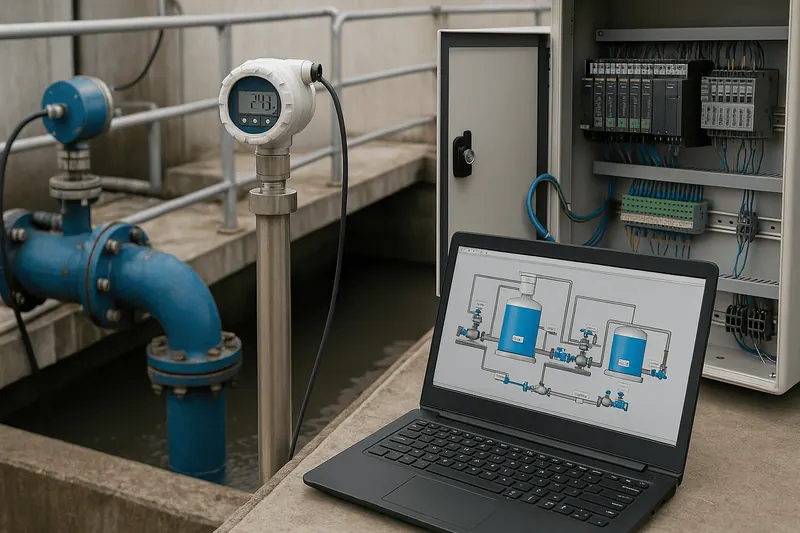
- Flowmeters for monitoring water input and output.
- Turbidity and pH sensors for water quality.
- DO & ORP sensors for biological treatment processes in WWTP.
2. Automated Control
- Pumps and blowers controlled automatically according to process requirements.
- Precise chemical dosing based on live sensor data, improving efficiency and reducing costs.
3. Dashboard Monitoring
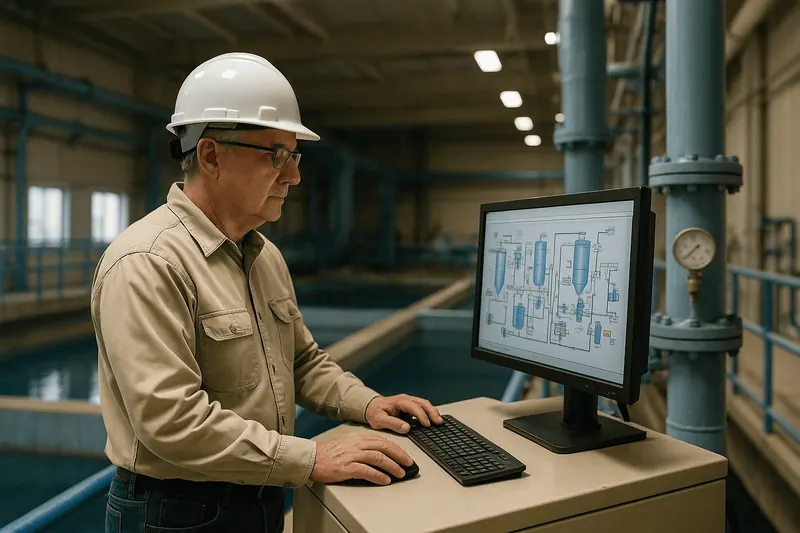
- Real-time visualization of plant operations.
- Alarms and notifications for critical parameters.
- Historical data logging for evaluations and compliance reporting.
WSI’s Experience in Digitalization
As a trusted system integrator in automation and environmental monitoring, PT. Wiratama Sistem Integrasi (WSI) has extensive experience in implementing digital systems for WTP and WWTP.
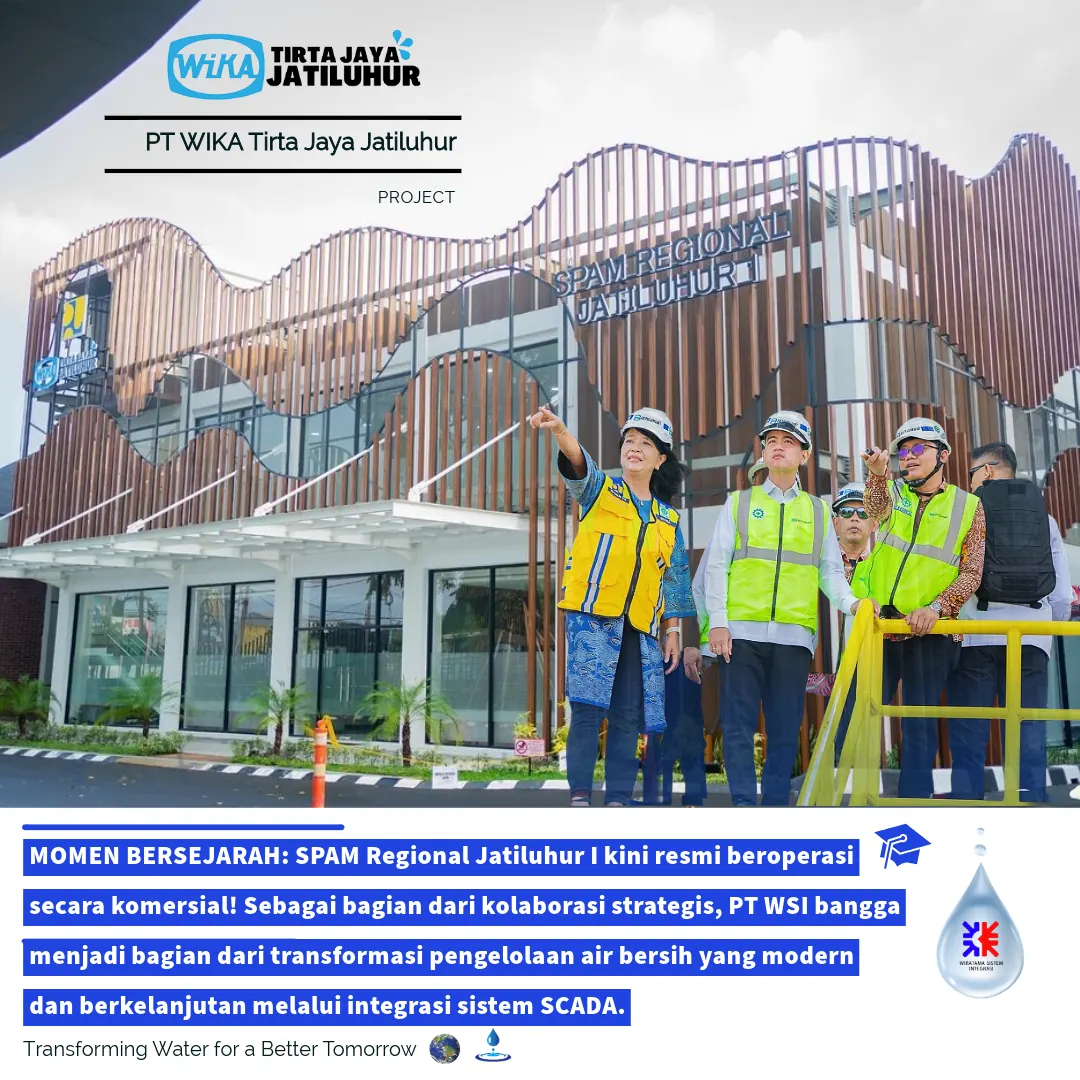
One of our major projects was at WTP Jatiluhur 1 (WTJJ 1) with a capacity of 4,750 LPS.
WSI provided a complete solution integrating:
- Flowmeters for accurate water flow measurement.
- Turbidity and Level Sensors for water quality assurance.
- Automated Chemical Dosing for optimized treatment processes.
This implementation enabled real-time monitoring, improved chemical efficiency, and ensured continuous large-scale water supply to the community.
Key Benefits of Digital Transformation
- Operational Efficiency: Reduced energy and chemical usage.
- Improved Reliability: Real-time data for faster responses.
- Regulatory Compliance: Simplified reporting to government authorities.
- Transparency: Management and stakeholders can access performance data anytime.
Case Examples
- Large-Scale WTP: At WTJJ 1, digital monitoring ensured water quality consistency and optimized chemical dosing, reducing operational costs.
- Industrial WWTP: Integration of DO & ORP sensors optimized blower usage, lowering energy consumption by up to 15%.
Digital transformation of WTP & WWTP in Indonesia is no longer optional—it is a strategic necessity. By leveraging smart sensors, automated controls, and centralized dashboards, utilities and industries can achieve both efficiency and regulatory compliance.
With proven expertise and successful projects such as WTP Jatiluhur 1 (4,750 LPS), PT. Wiratama Sistem Integrasi (WSI) is ready to support utilities and industries in modernizing their water and wastewater operations.
Interested in modernizing your WTP or WWTP operations?
Contact WSI today to learn more and request our digital monitoring and control solutions.